Disrupted environments
Mission-critical users require sensing that can operate when conditions become difficult.

Optii Corporation
Optii develops resilient fibre-optic RF sensing systems designed to preserve mission-critical RF awareness where conventional electronic sensing may be disrupted, degraded, or unable to perform.
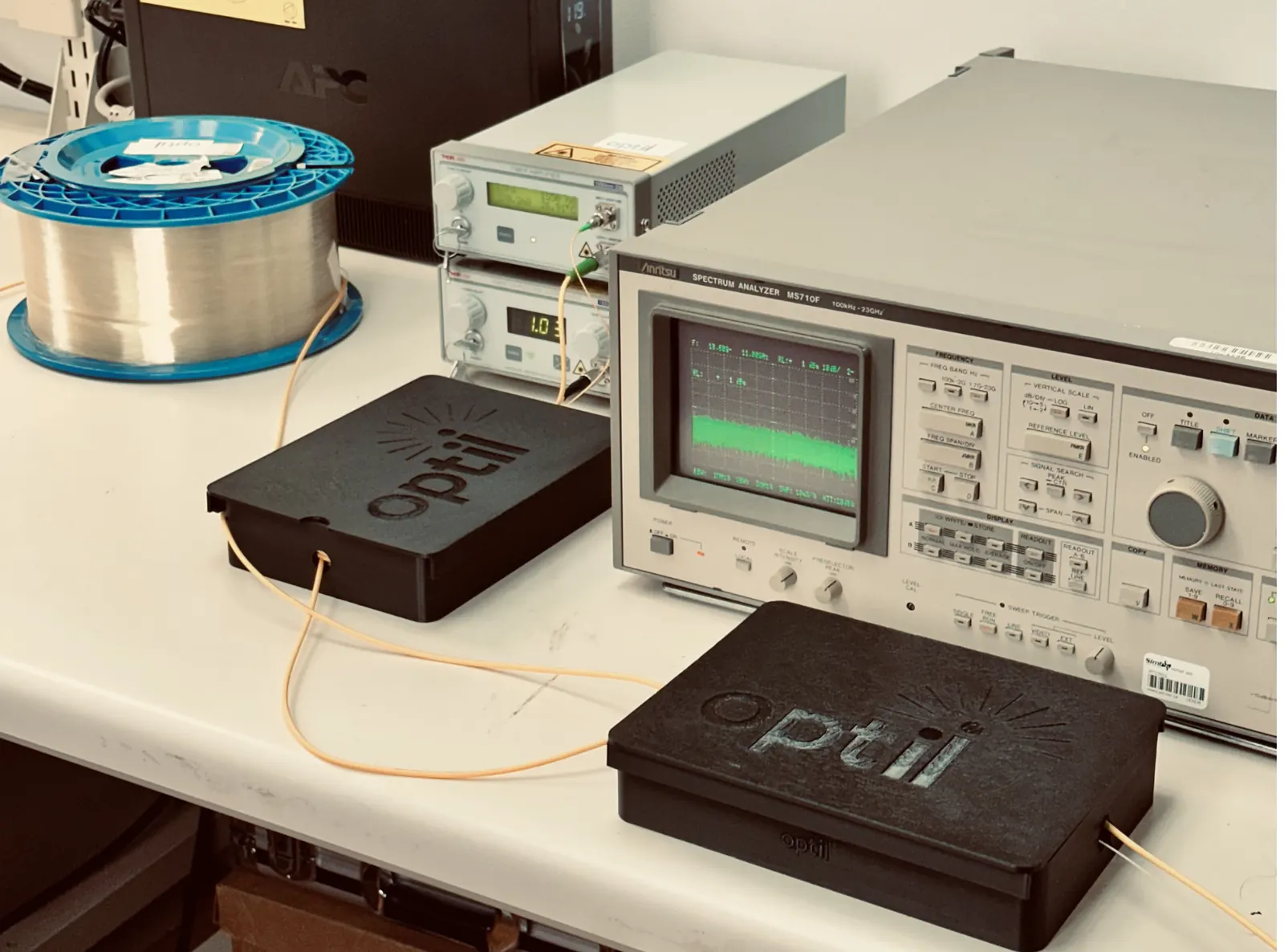
Modern operations depend on RF awareness, but conventional electronic sensing systems can be vulnerable in disrupted, interference-heavy, or high-consequence environments.
Mission-critical users require sensing that can operate when conditions become difficult.
Electronic sensing nodes can create operational risk when they require power and electronics at the sensing point.
Defence and infrastructure users increasingly need sensing concepts that scale across platforms and perimeters.
A simple contrast between conventional electronic sensing nodes and Optii's passive photonic sensing approach.
| Conventional RF Sensing | Optii Photonic Sensing |
|---|---|
| Electronic sensing at the node | Passive optical sensing point |
| Requires local electronics and power | No power or battery required at sensing end |
| More exposed to disruption | Designed for resilient sensing environments |
| Centralized architecture | Distributed and fibre-enabled deployment potential |
Explore where Optii passive photonic RF sensing can support resilient awareness across defence, maritime, aerospace, infrastructure, and wide-area security environments.
Survivable RF awareness for contested operating environments.
Resilient sensing concepts for naval, port, coastal, and maritime infrastructure contexts.
Photonic sensing concepts for extreme, remote, and mission-critical environments.
Distributed sensing for facilities, energy, communications, and secure industrial environments.
Fibre-enabled awareness across wide-area, remote, and mission-critical environments.
A passive RF sensing layer for evaluation within integrated Counter-UAS architectures.
Passive photonic sensing concepts for spectrum awareness in contested environments.
The Optii team is consistently pushing bleeding edge innovation boundaries in photonics radio frequency sensing.
TRL 6 completed; TRL 7 development underway.
Planned expansion toward broad multi-band RF sensing coverage.
Narrow linewidth response supporting frequency isolation.
RF detection demonstrated at signal levels down to approximately -40 dBm under tested laboratory conditions.
System demonstration completed in controlled or simulated relevant conditions.
System development and demonstrations in appropriate operationally relevant environments.
Build evaluator confidence through structured field testing.
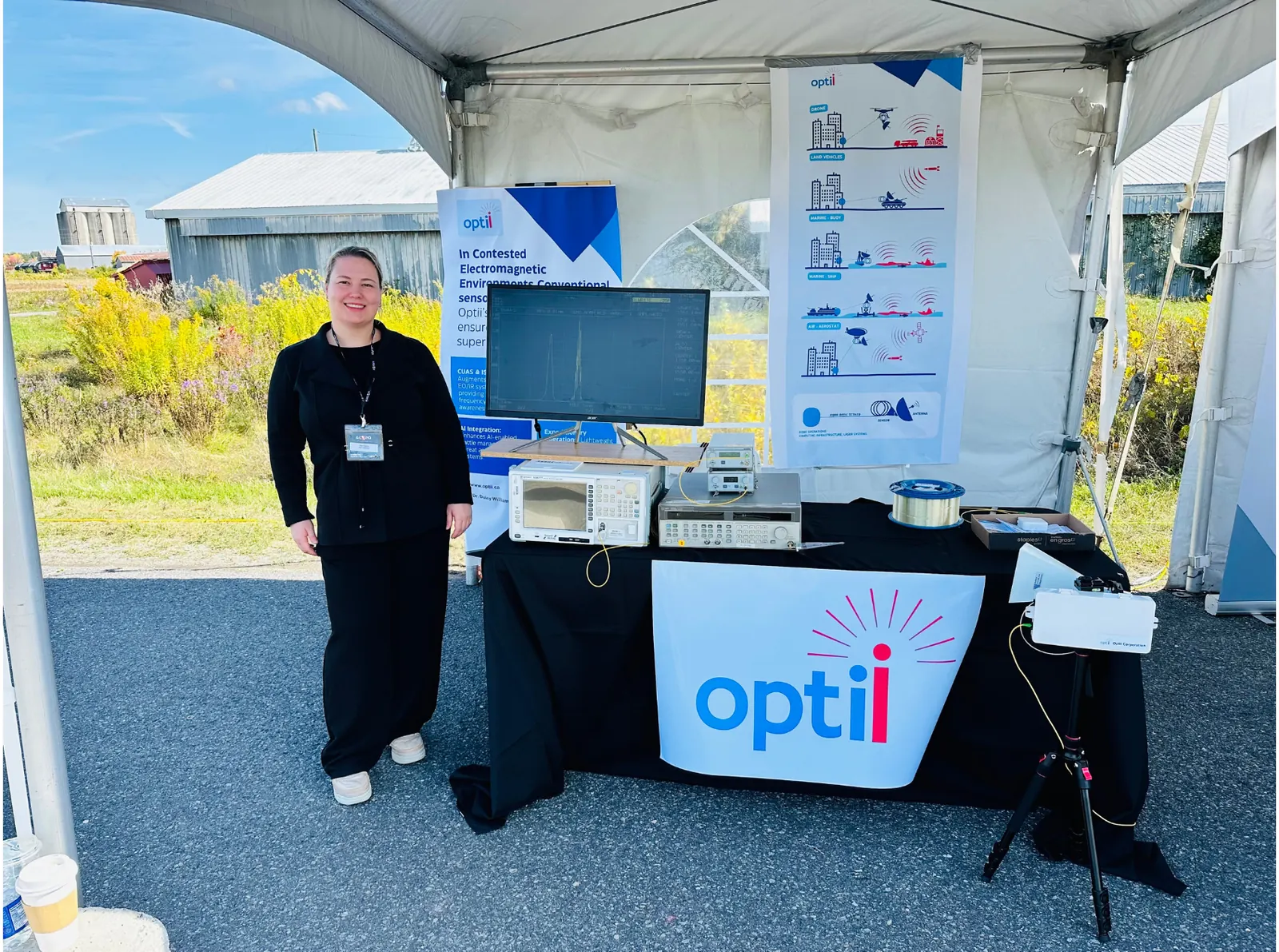
Optii is building market visibility across Canada, the United States, and Europe for defence, maritime, aerospace, critical infrastructure, and NATO-aligned sensing opportunities.
Ottawa headquarters, Canadian defence ecosystem engagement, ITB-aligned prime contractor partnerships, and Value Proposition relevance.
Virginia Beach and Hampton Roads presence supporting U.S. defence innovation, maritime security, and partner conversations.
Allied-market visibility through defence and security events, NATO-aligned sensing discussions, and aerospace and border-security opportunities.
Follow Optii announcements, demonstrations, conference activity, ecosystem engagement, and technical milestones.

Optii exhibited as part of Eurosatory Lab 2026 in Paris, generating strong interest in passive photonic RF sensing and its counter-UAS potential while meeting partners across Europe.

Optii will join the international defence and security community at Eurosatory 2026 in Paris to advance conversations around passive photonic RF sensing and resilient RF awareness.
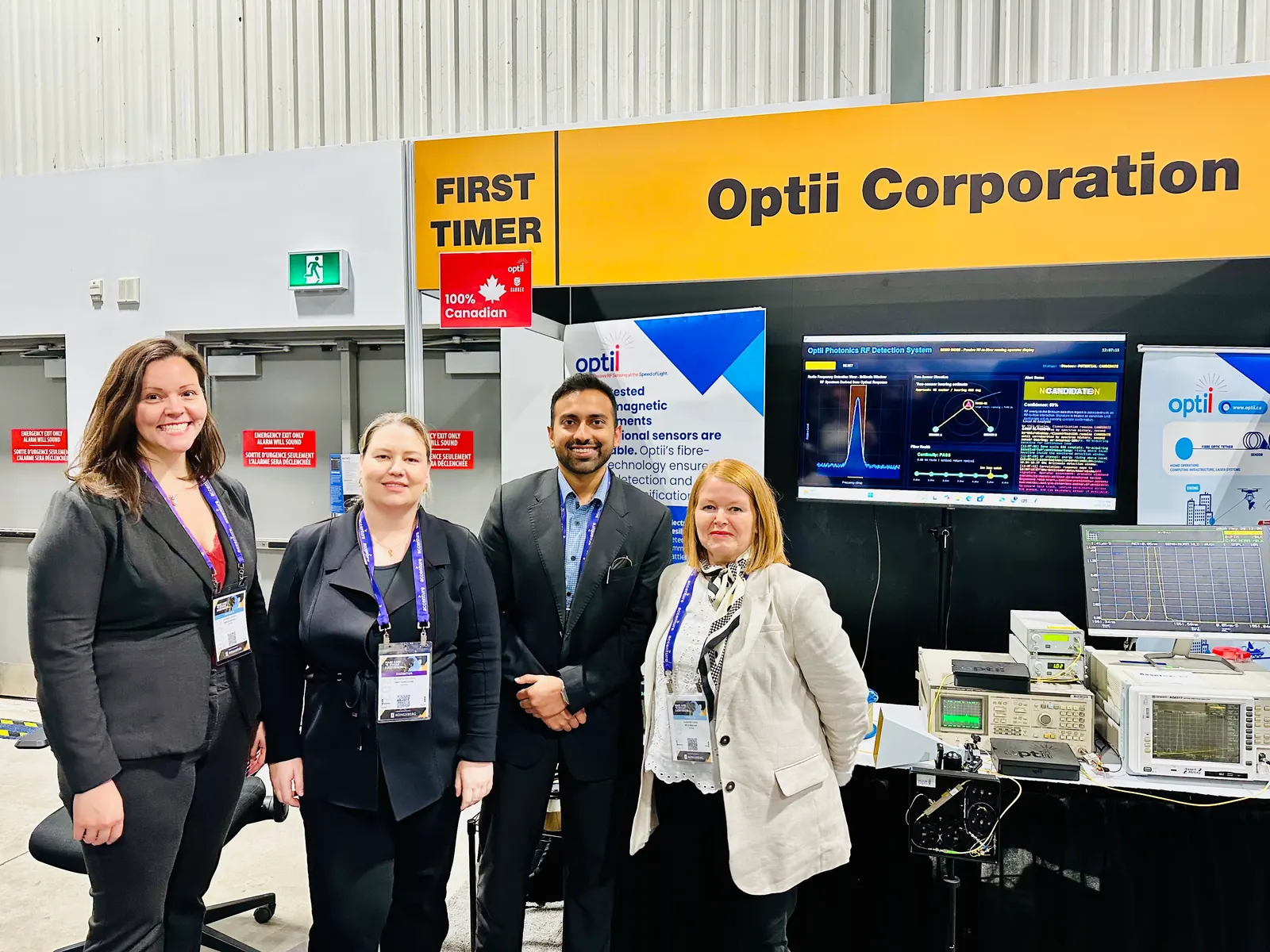
As first-time CANSEC exhibitors, Optii leaves encouraged by two days of live demonstrations, defence ecosystem conversations, and national and international partnership momentum.
Request a briefing, explore technology fit, or open a use-case discussion with Optii.